What Makes Premium Performance Wear Suitable for the Indian Climate?

Activewear designed for cool, dry climates often behaves very differently in India. A tee that feels comfortable in a temperate gym can turn heavy and clingy on a humid Mumbai morning or trap heat on a Delhi afternoon.
Choosing performance wear for Indian climate conditions isn't about buying the thinnest fabric available. It's about understanding how heat, humidity, sweat and airflow interact, and choosing garments that work with those forces rather than against them.
This guide explains what actually makes activewear suitable for Indian conditions, which fabric features matter most, how they differ city by city, and what to check before you buy.
What Makes Premium Performance Wear Suitable for the Indian Climate?
Performance wear suits the Indian climate when it lets heat escape, moves sweat off the skin, dries quickly, stays light against the body and holds up to frequent washing, all while remaining comfortable across long days, not just short workouts.
Five qualities separate genuinely climate-appropriate performance clothing India from ordinary activewear:
-
Breathability: Air can move through the fabric, allowing body heat to escape.
-
Moisture management: Sweat is pulled away from the skin and spread across the fabric so it can evaporate.
-
Quick drying: The garment doesn't stay damp for hours, which matters in humidity and during the monsoon.
-
Lightness with structure: It feels light but doesn't turn transparent or lose shape.
-
Durability under frequent washing: Heat means more washing, so fit, colour and fabric performance need to last.
A garment that handles only one or two of these may still feel fine for a quick session. For everyday performance wear in Indian conditions, it needs most of them.
Why Does Indian Heat Change What You Should Look for in Activewear?
Indian heat is often combined with high humidity, long exposure and constant movement between hot outdoors and air-conditioned interiors, so activewear for Indian heat has to manage sweat and temperature across a whole day, not just a workout.
The body cools itself mainly through the evaporation of sweat. In dry heat, sweat evaporates quickly. In humid heat, the air is already full of moisture, so evaporation slows, sweat lingers on the skin and clothing feels heavier and warmer.
That creates three India-specific challenges:
-
Sweat doesn't disappear on its own. In coastal cities, fabric has to actively help move and spread moisture, or it simply soaks through.
-
Wear times are long. Many people wear activewear through a commute, a workout and errands. A garment has to stay comfortable for hours.
-
Temperature swings are sharp. Moving between a hot street, a crowded metro and a strongly air-conditioned office or gym means damp fabric can quickly feel cold.
Quick Takeaway: In India, the question isn't only "Is this fabric cool?" It's "How does this fabric behave when I'm sweating, for hours, in humid air?"
Which Fabric Features Matter Most in Hot and Humid Weather?
The most important features are breathability, moisture management and drying speed, supported by a comfortable weight, a non-clingy texture and fabric that keeps its shape after sweat and washing.
Here's how common fabric characteristics compare in hot and humid conditions:
| Feature | Standard Cotton | Lightweight but Non-Technical Fabric | Breathable Performance Fabric | Moisture-Managing Performance Fabric |
|---|---|---|---|---|
| Airflow | Moderate | Can be high | High | Moderate to high |
| Sweat absorption | High (holds moisture) | Varies | Moderate | Moderate |
| Moisture management | Low | Varies | High | Pulls moisture away from skin |
| Drying speed | Slow | Varies | Fast | Very good |
| Feel when sweaty | Heavy, clingy | Can cling | Lighter | Stays drier against skin |
| Best in dry heat | Casual, low activity | Casual wear | Very good | Good |
| Best in humid heat | Poor for active use | Mixed | Very good | Very good |
| Trade-off | Soft and familiar, but stays wet | Light, but may be sheer or lose shape | Very good | May feel less airy if knit is dense |
What the table shows: No single feature solves the Indian climate. The best performance apparel India shoppers can choose combines airflow with moisture management and fast drying.
Other features worth attention:
-
Texture: A smooth or slightly textured surface tends to cling less than flat, heavy knits when damp.
-
Stretch: Good stretch prevents fabric from pulling against sweaty skin during movement.
-
Colour: Lighter colours reflect more sunlight outdoors; darker colours hide sweat marks better. Choose based on where you'll wear the piece.
How Do Breathability and Moisture-Wicking Work Together in Performance Wear?
Breathability lets heat and humid air escape through the fabric; moisture-wicking moves sweat away from the skin and spreads it out so it can evaporate. Together, they help the body do what it's trying to do: cool down.
They're often treated as the same thing, but they solve different problems.
-
Breathability is about air. A breathable fabric allows warm air trapped near your body to move out and cooler air to move in.
-
Moisture-wicking is about liquid. A wicking fabric draws sweat from the skin into the fabric and spreads it over a wider surface area, speeding up evaporation.
Why you need both:
A breathable fabric that doesn't manage moisture can still end up soaked. A wicking fabric with poor airflow may move sweat outward but struggle to let it evaporate, especially in humid air.
When both are present, the process works as a cycle: sweat leaves the skin, spreads across the fabric, evaporates through air movement, and the garment dries faster.
Expert Tip: In high humidity, drying speed often matters more than how cool a fabric feels in the store. A garment that feels cool when dry but stays damp for hours will be less comfortable in real use.
Does Lightweight Fabric Always Mean Better Breathability?
No. Lightweight fabric often feels cooler, but breathability depends on how the fabric is knit or woven and what it's made from, not only on its weight.
A thin fabric with a dense, tight construction can trap heat and moisture. A slightly heavier fabric with an open, airy knit can let more air through.
Lightweight fabrics also come with trade-offs:
| Lightweight Advantage | Lightweight Trade-off |
|---|---|
| Feels cooler against the skin | Can become sheer, especially when wet |
| Less bulk for layering and travel | May lose structure and look less polished |
| Often dries quickly | Can cling more when damp if it lacks stretch |
| Good for high-heat workouts | May wear out faster with frequent washing |
Practical Rule: Look for fabric that's light enough for heat, opaque enough for daily wear and structured enough to hold its shape off-duty. That balance is what makes a piece usable beyond the gym.
This is also why style matters in climate dressing. A tee that's cool but loses its shape or becomes see-through won't work for a café, a commute or a casual office. Good high performance activewear India buyers rely on should function in heat and still look considered.
What Should Performance Wear Offer for Indian Conditions?
Beyond fabric, climate-appropriate performance wear should offer a fit that allows airflow, construction that avoids irritation, easy care and enough versatility to be worn across a full day.
Fit and silhouette
-
A fit that skims rather than clings allows air to move between the fabric and skin.
-
Relaxed tops work well in heat, but balance them with tapered bottoms to keep the silhouette sharp.
-
Compression can support training but may feel hot for all-day wear. Save it for workouts.
Construction details
-
Flat or smooth seams reduce rubbing when skin is sweaty.
-
Ventilated zones, where present, help in high-sweat areas like the back and underarms.
-
Waistbands should stay comfortable when damp and during long periods of sitting.
Care and durability
-
Garments should handle frequent washing without fading, stretching or losing shape.
-
Quick-drying pieces are especially valuable during the monsoon, when sun-drying isn't always possible.
Versatility
-
In Indian cities, the same outfit often covers a commute, a workout and a café stop.
-
Neutral colours and clean silhouettes help performance pieces move from training to everyday wear. This is where versatile performance wear becomes particularly useful, combining functional sportswear with the flexibility of lifestyle wear.
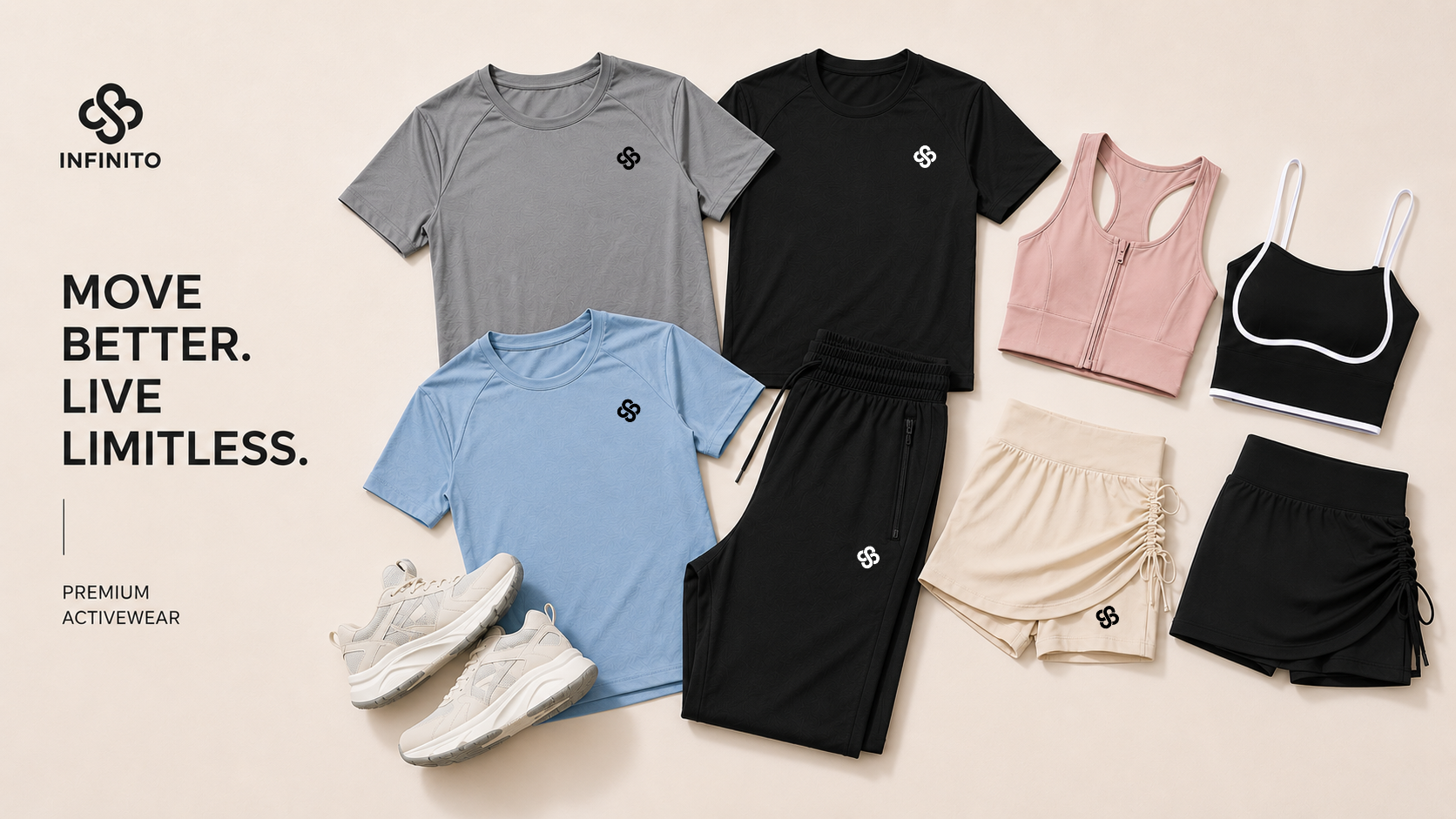
As an example, a lightweight, breathable Infinito performance tee is the kind of garment designed for this routine: comfortable enough for a morning session, and clean enough in fit to wear through the rest of the day without looking like gym kit.
How Should Activewear Perform in Different Indian Cities?
India's climate varies widely, so the ideal performance wardrobe shifts from city to city. For current seasonal conditions in your area, the India Meteorological Department is the most reliable reference.
Mumbai: humid and coastal
Humidity is the main challenge, especially during the monsoon. Prioritise moisture management and fast drying over pure lightness. Avoid heavy cotton for active use. Darker or mid-tone colours help conceal sweat on commutes.
Delhi: extreme heat, then humidity
Summers bring intense dry heat, followed by humid monsoon months and genuine winters. Breathability and light colours matter most in peak summer. A lightweight layer earns its place for air-conditioned interiors and cooler months.
Bengaluru: milder and changeable
Generally more moderate temperatures and frequent weather shifts reward versatility. Mid-weight performance pieces and a light layer work well for early mornings, evening rain and office-to-gym transitions.
Chennai: hot and humid most of the year
Heat and humidity combine for long stretches. This is where breathability and moisture wicking together matter most. Choose loose-but-structured fits and fabrics that dry quickly.
Hyderabad: hot, drier summers
Summers are hot but typically less humid than coastal cities. Airflow and sun-appropriate colours lead. Lightweight bottoms and shorts make outdoor training more comfortable.
| City | Primary Challenge | Priority Feature |
|---|---|---|
| Mumbai | Humidity, monsoon | Moisture management, quick drying |
| Delhi | Extreme summer heat, seasonal shifts | Breathability, layering |
| Bengaluru | Changeable weather | Versatility, light layers |
| Chennai | Year-round heat and humidity | Breathability + moisture-wicking |
| Hyderabad | Hot, drier summers | Airflow, light colours |
Common Mistake: Buying one "summer" wardrobe for all of India.
Better Approach: Match fabric priorities to your city's humidity, not just its temperature.
Indian Climate Performance Wear Buying Checklist
Use these five checks before buying any piece of breathable performance wear India conditions will test:
1. Does it breathe?
Hold the fabric up to light and feel for airflow. It should feel airy, not dense or plasticky.
2. Does it manage sweat?
Look for moisture-wicking or moisture-managing properties, and choose performance fabrics over standard cotton for active use.
3. Does it dry quickly?
Especially important in Mumbai, Chennai and during the monsoon anywhere. A quick drying garment is more comfortable and easier to care for.
4. Does it hold its shape and opacity?
Stretch it, check that it recovers, and make sure it isn't sheer. A good performance essential stays presentable through movement, sweat and washing.
5. Can you wear it beyond the gym?
Check fit, colour and silhouette. If it works for a commute or a café, it will earn its place in your wardrobe far faster.
If a garment passes all five, it's well suited to Indian routines, whether you're training in the morning, commuting through the afternoon or heading out in the evening. That combination of performance and everyday wearability is the standard Infinito builds its premium activewear India performance wear around.
FAQs About Performance Wear for the Indian Climate
What is the best performance wear for the Indian climate?
The best performance wear for the Indian climate combines breathability, moisture management and quick drying in a lightweight but opaque fabric. It should fit without clinging, hold its shape after frequent washing and be versatile enough to wear through a full day.
What should I wear for workouts in hot weather?
Wear a breathable, moisture-wicking top and lightweight shorts or bottoms that allow free movement. Choose relaxed-but-structured fits for airflow, light colours for outdoor sessions and avoid heavy cotton, which holds sweat.
Is breathable activewear better for Indian summers?
Yes, breathable activewear helps body heat escape and supports sweat evaporation, which makes it more comfortable in summer. It works best when paired with moisture wicking and quick-drying properties, especially in humid cities.
What makes activewear suitable for humid weather?
Activewear suits humid weather when it pulls sweat away from the skin, spreads moisture for faster evaporation, dries quickly and doesn't cling when damp. Airflow, smooth texture and good stretch all help it stay comfortable.